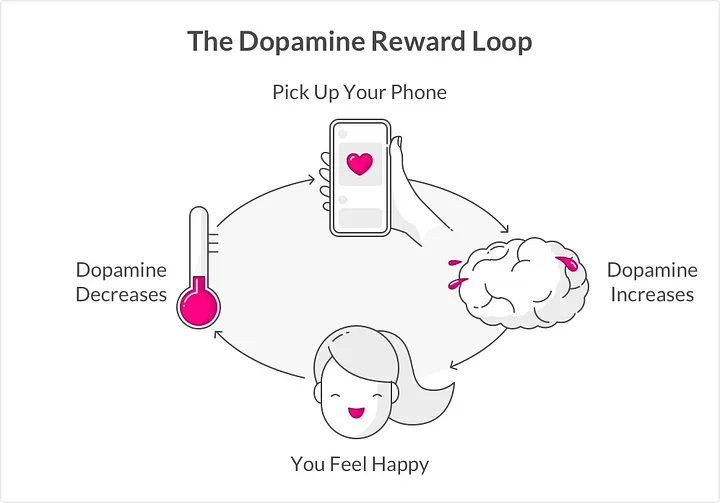
In today’s digital age, a type of addiction increasingly capturing the attention of youth is the rapid dopamine surge provided by scrolling content and short videos. This modern-day plague has become a significant threat to the mental and emotional well-being of young individuals. In this article, we will explore the origins, effects, and proposed solutions regarding the addiction to scrolling content among the new generation.
Origins of Addiction: Dopamine and the Destruction of Short Pleasures
The allure of scrolling content is primarily driven by dopamine. Dopamine is a chemical in the brain that influences reward centers and is often associated with feelings of pleasure, satisfaction, and happiness. Watching short videos and browsing content triggers a rapid release of dopamine. However, this rapid dopamine increase is temporary and superficial.
Youth develop an addiction to scrolling content as they seek to repeatedly experience this rapid dopamine surge. This constant state of stimulation dulls their deep thinking skills, leads to distractibility, and contributes to mental imbalance. Consequently, while chasing short-term gratification, youth miss out on opportunities to build meaningful connections and engage in profound relationships.
Effects: Devastating Impact on Mental and Emotional Balance
The addiction to scrolling content profoundly affects the mental and emotional health of young individuals. Critical thinking skills and analytical abilities become dulled with constant exposure to short videos and visual stimuli. Consequently, youth experience a decline in problem-solving skills and suppression of creative thinking.
Emotionally, addiction to scrolling content weakens youths’ emotional connections and negatively impacts their social relationships. The tendency to focus on superficial metrics such as likes and follower counts, rather than genuine connections, can lead to social isolation and loneliness. Additionally, the constant state of digital stimulation contributes to the emergence of anxiety and depression.
Proposed Solutions: Conscious Consumption and Strengthening Real Connections
To combat addiction to scrolling content, promoting conscious consumption habits is essential. Youth must learn to selectively consume content and establish boundaries to protect their mental well-being. Furthermore, allocating time for offline activities and real-world interactions is crucial in balancing digital media usage.
Additionally, strengthening real connections and fostering meaningful relationships is vital. Youth must learn to enjoy life in the real world rather than the virtual realm. Families, educational institutions, and other stakeholders in society should establish support systems to help youth develop social skills and enhance emotional intelligence.
In conclusion, the rapid dopamine surge provided by scrolling content poses a severe threat to the mental and emotional health of youth. However, with the adoption of conscious consumption habits and the strengthening of real connections, the effects of this addiction can be mitigated, and youth can achieve a healthier digital balance.